How to Train a Service Dog in Quebec (Step-by-Step Guide for Owner Training)
There are a variety of organizations that provide trained service dogs. They often have a rigorous screening process for applicants and a lengthy waitlist. For this reason, many people decide to embark on the journey of training their own service dog. They are what we call "Owner-Trainers" and their dog is an owner trained service dog.
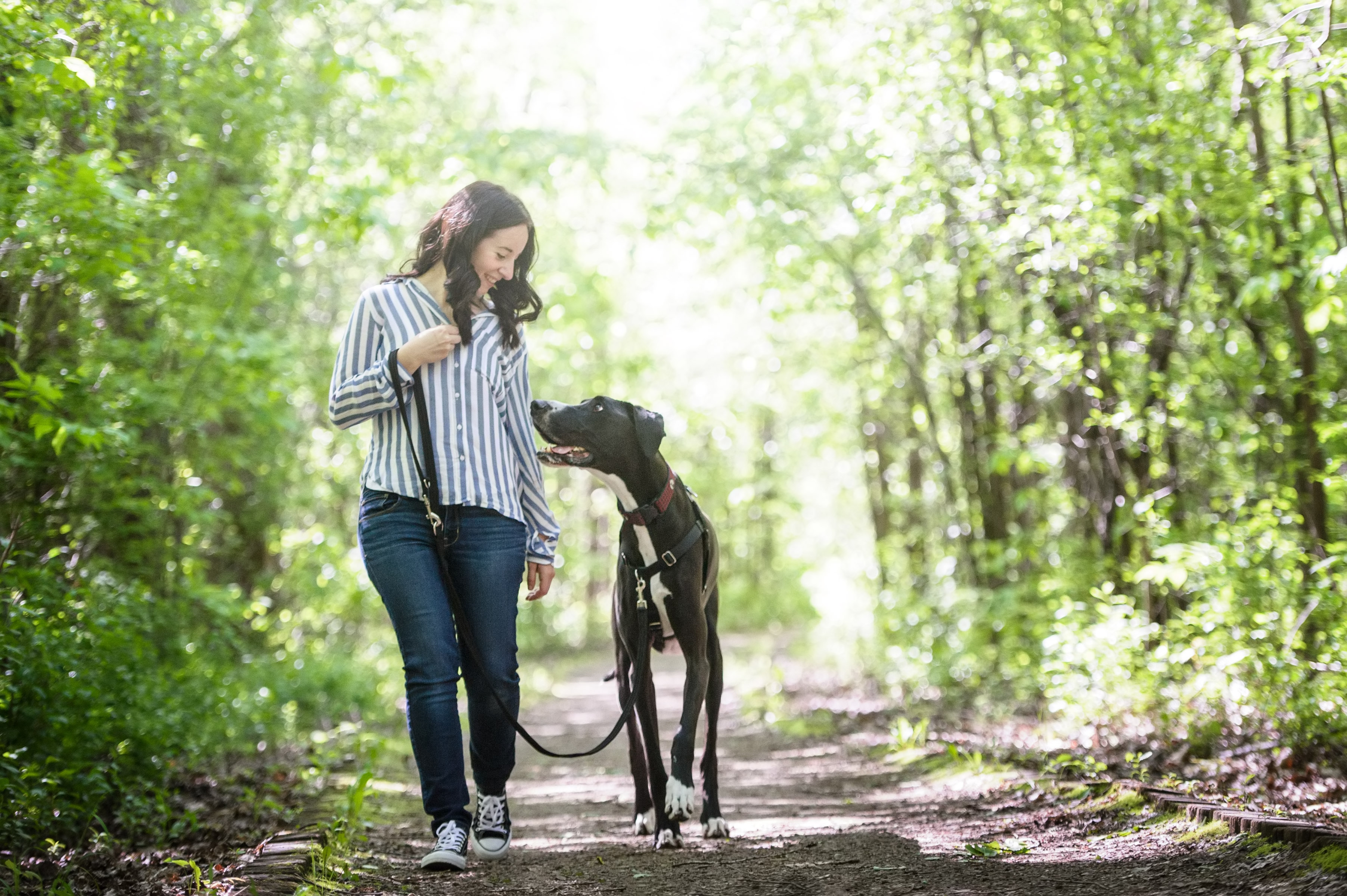
This does not make their service dog any less credible or less effective in their ability to do their job. However, it is a long-term commitment that requires a lot of work, proper structure, consistency, and realistic expectations.
If you’re in Laval, Montreal, or elsewhere in Quebec and considering owner-training a service dog, this step-by-step guide will walk you through:
Legal considerations
Choosing the right dog
Foundational training
Public access expectations
Timeline and cost
Step 1: Understand Service Dog Laws in Quebec
In Quebec, service dogs are protected under the Charter of Human Rights and Freedoms, which protects individuals with disabilities from discrimination.
People with disabilities accompanied by their service dog have the right to access any public space to receive goods and services. This includes:
shops
restaurants
hotels and other tourist accommodations
public transportation and taxis
workplaces
recreational spaces
housing
Businesses are not allowed to refuse a service dog, or charge an extra fee (example: animal fees in hotels). If a space is not accessible, the provider must make a genuine effort to allow access unless their presence can cause undue hardship. For example, a dog cannot be granted access to an operating room in a hospital because it requires a high level of asepsis. (note this is not a public space).
However undue hardship does not include a phobia, a client's preference, a hypothetical risk (the dog did not show any signs of aggression or problematic behaviours) or an allergy. Proper accommodations must be made for both parties.
A service dog must wear a visible ID such as a harness, badge or scarf of the organization that trained it. The person can also present a document confirming their training but this is not required and access must still be given without it.
It's important to remember that a service dog in training does not count as a service dog and may not receive access.
If you plan to train a service dog in Quebec, understanding your legal rights and responsibilities is the first step.
It's important to know the difference :
A service dog is a dog who has been trained to mitigate a person's disability - Only one person.
An emotional support dog is not tasked trained. Simply their presence helps provide relief to their person
A therapy dog can also be trained but training received is to provide support to a wide variety of people.
An emotional support dog and a therapy dog are not service dogs and do not fall under the laws to grant them access or protection.
Quebec laws (in french only) Rôle et droit d’accès des chiens d’assistance
Step 2: Choose the Right Dog for Service Work
Not every dog can become a service dog. Service dog training programs have about a 50% success rate. We can imagine that this number is even lower for owner-trained service dogs and we must adjust our expectations accordingly.
When selecting a potential service dog prospect, look for:
Stable, confident temperament
Non-reactive to people or other dogs
Strong recovery from stress
Highly motivated for food or toys
Natural handler focus
Under the age of 4 years old
Common breeds used for service dog training in Canada include:
Labrador Retrievers
Golden Retrievers
Standard Poodles
Any dog breed can be a service dog, as long as they can complete the task you need. For example, if you need mobility assistance such as your dog opening and closing doors for you, picking up objects such as your phone or shoes - a small breed like a chihuahua would have a difficult time accomplishing these tasks. It's important to be realistic on what they can do for you.
Even when selecting the perfect candidate and going through the training steps - it does not always mean a dog will successfully complete the training and become an official service dog. The part most dogs struggle with is public access.
Step 3: Begin Early Foundation Training
If you're raising a service dog puppy, early socialization is critical. This will give your puppy skills that will help guide them throughout their life.
Between the ages of 3-16 weeks is the critical socialization period. This is when puppies are like a sponge, absorbing everything and most willing to go out and explore. It's very important to prioritize socialization and introduce your puppy to the many environments and stimuli they will encounter in their daily life as an adult as it plays a major role in long-term stability.
Here are a few things to focus on:
Exposure to different surfaces, sounds, and places
Seeing a variety of people and animals
Confidence building
Impulse control
Focus/eye contact
Crate training
If you’re located in Laval or Montreal, structured puppy classes that prioritize a variety of socialization exercises — not just "obedience" — are ideal foundations for future service dogs. Learn more about our classes here!
Step 4: Teach Core Skills
Before task training begins, your service dog must be able to demonstrate a variety of skills - reliably.
Core skills include:
Reliable recall
Loose leash walking
Sit, down, and stay with duration
Leave it
Settle under a table
Focus on handler in distracting environments
For public access, your service dog must:
Remain calm and focused in stores
Lie quietly during appointments
Ignore or neutral towards strangers and other dogs
Recover quickly from unexpected noises
Owner-handlers should expect 12–24 months of consistent training before reaching this level of reliability.
Step 5: Health Testing and Physical Maturity
Before full public access work and task training, your service dog should be physically sound. This will ensure they are physically ready for the work.
Health evaluations may include:
Hip and elbow screenings
Genetic testing (breed-dependent)
Veterinary clearance
Regular check-ups throughout your dog's early months are important to ensure they are growing properly and spot any medical issues early.
Keep in mind, most service dogs are not fully mature until 18–24 months of age.
Step 6: Public Access Training
Public access training is one of the most challenging stages of service dog training. This is where most dog's flunk. Many environments are overwhelming and this is where most dog's anxieties and sensitivities come out. As a service dog coach, part of my job is to continuously reevaluate the dog in a variety of settings to ensure they are not only reliable for their future job as a service dog but also that they will enjoy it. Even minor anxieties can escalate over time.
Public access training should include:
Entering stores calmly
Riding elevators
Navigating crowds
Settling in restaurants
Ignoring food
Remaining composed during long appointments
It's important to note that dog's who don't pass public access can still be an in-home service dog. This means your dog will still perform a variety of tasks for you but only at home. They are still considered a service dogs in which laws for housing accommodations still applies.
Step 7: Task Training for Service Dogs
A service dog must be trained to perform a minimum of 3 specific tasks that mitigate their handler's disability. They can help with a variety of disabilities including anxiety disorders, autism, mobility, hearing and seeing.
Examples of service dog tasks include:
Deep pressure therapy
Medical alert behaviours
Retrieving dropped items
Alert to sounds
Interrupting repetitive or anxiety behaviours
Tasks must be clear, repeatable, and directly related to the handler’s disability.
Professional guidance during this stage significantly improves reliability and precision.
How Long Does It Take to Train a Service Dog in Quebec?
Most owner-trained service dogs require:
12 to 18+ months commitment
Hundreds of structured training sessions
Consistent real-world exposure
Service dog training requires patience, planning, and ethical guidance to ensure the safety and wellbeing of both dog and their handler.
FAQs
Do service dogs need certification in Quebec?
There is no mandatory provincial certification.
Can landlords refuse a service dog in Quebec?
Under the Charter of Human Rights and Freedoms, landlords cannot discriminate against individuals with disabilities who require a service dog.
Can I train my own service dog in Canada?
Yes. Owner-training is permitted in Quebec, but professional support increases success rates.
If you are located in Laval or the North Shore of Montreal, we offer service dog training for a variety of disabilities. If you are outside our area, we can also help virtually.